The digital branding industry has entered the new age of branding. The past was when brand image was created primarily using static images, such as logos, colors, design, and typography layouts. While these aspects are vital, the modern consumer wants an experience that is more immersive as well as more dynamic. In 2026, brands no longer compete solely on aesthetics of design; they compete through online experiences.
That's where sophisticated 3-D tools for design have redefined how branding will evolve in the near future.
Nowadays, businesses use 3D visuals, interactive branding elements, and immersive virtual environments that create more emotional bonds with their customers. Instead of static visuals, businesses are communicating via three-dimensional product images as well as animated identities for brands, immersive environments and virtual narratives.
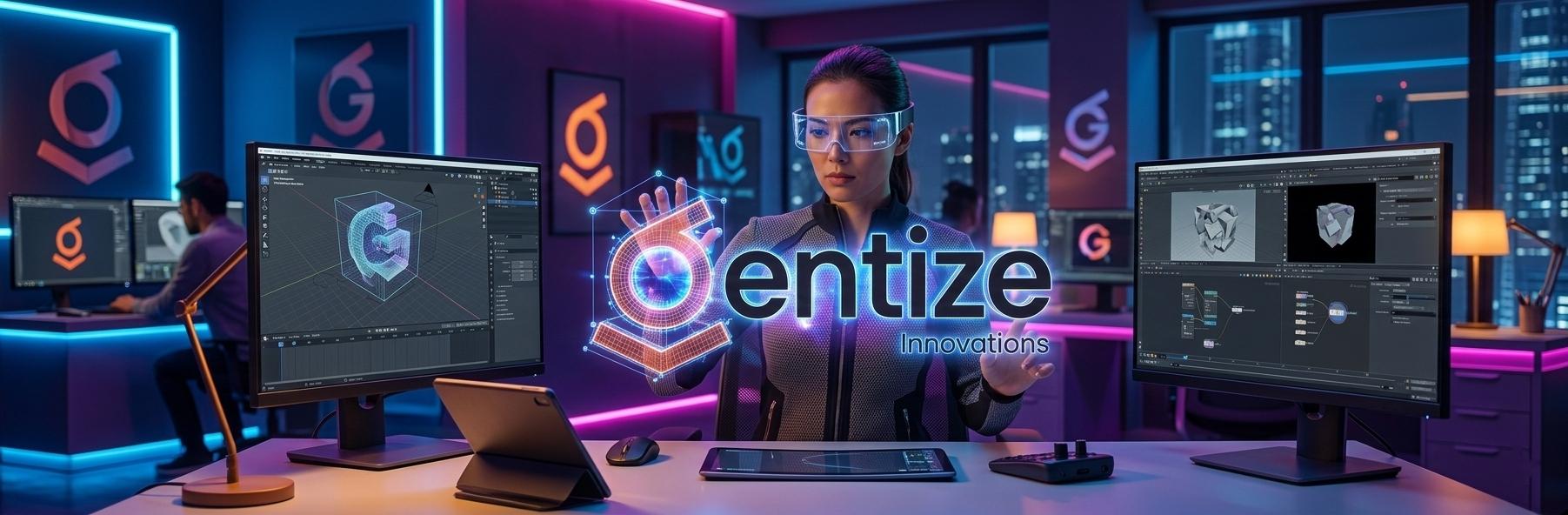
We are at Gentize Innovation Gentize Innovation, we've witnessed how cutting-edge design techniques transform the ways companies present themselves on the internet. Through the combination of creativity and powerful 3D technology, businesses are able to develop visual experiences that draw the attention of their customers, establish trust and create lasting impressions for the people they serve.
This article examines how modern 3D tools for design are shifting the way brands are branded in 2026, the technology that underlies them and the reasons why companies that embrace these tools early gain advantages in competition.
In order to understand the significance of the use of 3D designs, it's crucial to examine the way that digital branding has changed through time.
The early days of the web, brands concentrated on
They were successful at the days when online experiences were restricted. As technology developed and expectations of users increased the need for brands to expand past static imagery.
The following phase was introduced:
In 2026, branding is getting even more advanced with the development of sophisticated 3D design systems. Design tools of the present allow firms to design visually engaging identities which feel more dynamic than static.
The shift is among the most significant changes in branding and marketing through digital media.
Modern 3D design tools can be powerful digital platforms that permit designers to design animation, render, and three-dimensional images to digitally-generated environments.
These tools enable creators to design:
Contrary to conventional graphic design software, 3D tools simulate real-world lighting, textures and depth. This lets digital graphics appear significantly more authentic and captivating.
Modern tools integrate the latest technologies, including:
Gentize Innovation Gentize Innovation Gentize Innovation, these tools help to develop images for brands that are contemporary, modern and extremely engaging to digital viewers.
Digital users are inundated with videos and content each second. From the feeds of social media channels to video sites and online shops, consumers are bombarded with thousands of videos every single day throughout the day.
In order to stand out in these environments, companies need to develop visuals that draw interest.
Three-dimensional branding has several benefits:
3D-based images are naturally able to draw greater attention than flat images. The lighting, depth and movement create a feeling of authenticity that pulls viewers into the.
Experiences that are immersive can be remembered better than static images. An effective 3D branding identity could significantly increase brand recognition.
The three-dimensional environment allows brands to communicate their stories visually. Instead of just displaying data the brands are able to create visually appealing experiences for their customers.
Interactive images encourage viewers to browse, click move, zoom, or rotate to engage with digital content.
Thanks to these advantages Many companies are using advanced 3D designs into their strategies for digital branding.
Brand identity isn't restricted to colors and logos. Nowadays, with the advent of digital technology Brand identity encompasses the complete visual experience people encounter on the internet.
Modern 3D tools enable companies to expand their brand's identity through multiple platforms.
Example:
The consistent experience of visuals increases brand recognition. It helps customers to associate certain visual styles associated with the brand.
Gentize Innovation Gentize Innovation the latest digital branding strategies typically combine the traditional principles of design with modern 3D visualizations to make distinctive branding names.
One of the strongest applications for advanced 3D instruments is visualization of products.
Instead of using conventional product photos, companies are now able to create extremely precise digital models of their products which customers can interact with.
The models let users:
The level of interaction increases confidence in customers as well as helps them be able to comprehend the products they purchase.
In many sectors, such as eCommerce and electronics furniture, fashion, and even furniture 3D visualization has become an integral part of the purchasing experience.
One of the hottest advancements in contemporary 3D concepts is the real-time rendering..
Traditional rendering techniques demanded designers to wait for days for the best visuals to be taken care of. Real-time rendering reduces the time because it generates visuals immediately.
The designers can use this to:
Real-time rendering allows sites and applications to display interactive 3D content without any performance problems.
In Gentize Innovation the real-time rendering technology helps brands design digital environments that feel seamless as well as responsive and visually stunning.
Motion can be a very effective way to tell stories. If it is combined with 3D visuals, motion branding can be even more powerful.
3D animation lets brands make their brand's visual identity come into the world through:
As an example, a company's logo could slowly move or change when a user visits a site. These small animations provide memorable moments that enhance brand awareness.
Motion branding plays an essential role in marketing via social media, with eye-catching images that can enhance participation.
A different major development in digital branding involves the development of virtual worlds.
Companies are creating entire digital environments where customers can discover products, get information about the services they offer, and engage with the content.
Examples include:
The benefits of these experiences are especially evident for industries like design, retail as well as education and entertainment.
Instead of simply browsing static websites instead, visitors can explore virtual environments that feel akin to actual-world environments.
The latest 3D tooling for design are creating new types of virtual reality.
Augmented reality allows digital objects to be seen in the physical world via smartphones and AR devices.
Brands are able to use AR:
This kind of experience strengthens the link between branding on the internet and actual interactions.
Artificial Intelligence is playing a growing role in the modern workflow of design.
AI-powered tools are able to help designers with:
AI aids in optimizing digital assets, ensuring they function well across various platforms.
In Gentize Innovation Gentize Innovation, the combination of AI technology along with 3D design tools enables teams to create quality branding materials faster, and with the same the creative control.
Social media are getting increasingly visually competitive each year. Businesses must continuously create quality content that stands out among the overcrowded feeds.
Three-dimensional images have an unique advantage due to the fact that they are more engaging and dynamic as opposed to traditional images.
Companies are now using 3D elements to help:
They grab the attention of viewers quickly and encourage viewers to engage with the material.
The latest websites are evolving into an immersive digital experience.
Instead of static pages stuffed with text and images websites today include interactive elements for example:
The features will keep viewers entertained and make them want to read more.
In Gentize Innovation the latest tools for 3D design help convert the traditional web pages into brand-specific interactive environments.
Experience with customers is among the key factors to the success of digital branding.
In the event that users engage through immersive images it makes them feel closer to the company.
3D design improves customer experience by:
This is why these factors help build stronger relations with brands and greater levels of customer satisfaction.
Although advanced 3D tools provide significant advantages, their implementation needs meticulous planning.
Brands need to consider aspects like:
Inadequately optimized 3D content could slow sites or cause technical problems.
Design teams with experience ensure aesthetic quality is balanced by high performance.
The digital branding industry will evolve with the development of new technology.
Future developments may include:
With the advancement of technology, brands will more often rely on the latest technology to show their brand's identity.
Companies that start adopting these techniques now will be more prepared to meet the challenges of the coming years.
Modern 3D technology for design is revolutionizing branding and digital media by transforming the way brands present themselves to customers in ways unimaginable even a couple of years just a few years ago. Through introducing motion, depth interactivity and depth into digital experience, these tools aid brands in communicating their message more effectively.
From interactive visualisation of product features to immersive branding environments 3D design is revolutionizing how organizations connect with their audience on the internet.
In 2026, the digital brand will no longer be just about visuals, it's now all about making experiences.
The brands that make use of the latest 3D technology are not just increasing their visual appeal, but are also enhancing interaction, storytelling, and relationships with customers.
We are Gentize Innovation The goal is to combine innovation, technology and ingenuity to create effective digital branding experiences. Technology continues to advance in the field of advanced 3D design and is expected to remain an essential instrument to shape what branding's future will look like in the modern world.